The State of Research Peptide Testing, 2026
Four questions get asked of every research peptide specification, and they are answered by different instruments with different blind spots. This report sets out what each measurement establishes, what it leaves open, and which figures the category does not publish at all — including the ones missing from this catalogue.
What this report covers, and what it is not
This is an account of what can and cannot be established about a research peptide from the tests the category actually runs. It is about method and specification. It makes no statement about what any compound does, and nothing in it should be read as one.
It is also not a survey of suppliers. No vendor is named, ranked or scored. A supplier that publishes its methods and its limits can be evaluated on them; one that publishes a number and nothing else cannot be evaluated at all, and that distinction does not require naming anybody.
The four questions a specification can answer
Almost everything a specification is asked to settle reduces to four questions, and they are answered by different instruments with different blind spots.
| Question | What answers it | What it still leaves open |
|---|---|---|
| Is it the right molecule? | Mass spectrometry | How much of the sample is that molecule |
| How much of the sample is the main peak? | Reverse-phase HPLC | What the remaining mass consists of |
| How much of the vial is peptide by mass? | Net peptide content | Nothing about identity or contamination |
| Is it free of biological contamination? | Sterility and endotoxin assays | Everything about chemical identity |
No single figure covers two rows of that table. A specification that publishes one number is answering one question, and the common error is reading it as an answer to all four.
Purity is a ratio, not a mass
An HPLC purity figure is a peak-area ratio: the area under the main peak divided by the total area of everything the detector saw, usually at 214–220 nm. It describes the sample the laboratory received, at the wavelength it was read.
Two consequences follow, and both are routinely missed. Anything that does not absorb at that wavelength contributes no area and is therefore invisible to the figure. And the figure is relative — it says how the main peak compares with the other peaks, not how much of the vial's mass the main peak represents. Both points are worked through in the note on purity versus net peptide content elsewhere in this journal; this report inherits them rather than restating the arithmetic.
Identity and quantity are different measurements
Mass spectrometry weighs. Chromatography counts. A clean chromatogram establishes that one species dominates the sample; it does not establish which species that is. A correct mass establishes what the molecule is; it says nothing about how much of the vial consists of it.
The gap between purity and mass
Net peptide content is the fraction of a vial's mass that is peptide, as distinct from counterion, residual moisture and salt. It is measured differently from purity — by amino acid analysis or nitrogen determination rather than by chromatography — and it is the figure least often published in this category.
The gap between a purity percentage and a net content percentage is not a rounding difference. Counterion alone can account for a substantial share of dry mass on some sequences, and it is chromatographically silent at the wavelengths purity is read at.
What the category does not test for
Sterility, endotoxin and pyrogen testing are largely absent from research-grade supply, and this is a matter of scope rather than an oversight: the assays answer a question about biological contamination that a chemical identity and purity workflow was never designed to address.
The observation worth carrying is that absence of a claim is not the same as absence of a problem, and it is also not evidence of one. Where a limit has not been measured, the honest form is to say so.
Blends make one figure carry several compounds
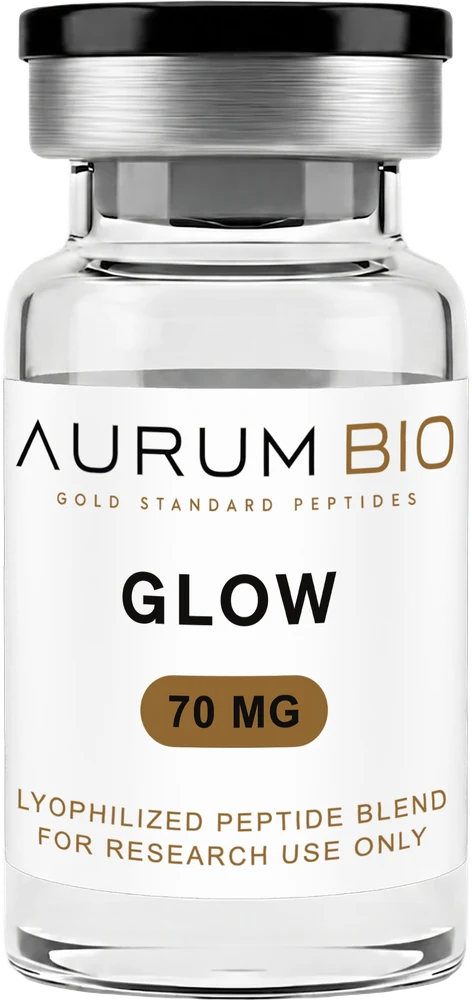
A multi-component vial states a composition — the masses it was formulated to contain — alongside a purity figure describing its components. Composition is a formulation intent; purity is a property of the inputs. Neither is a content assay of an individual finished vial, and a specification that states both has still not established the mass split inside any particular container.
What Aurum publishes, and what it does not
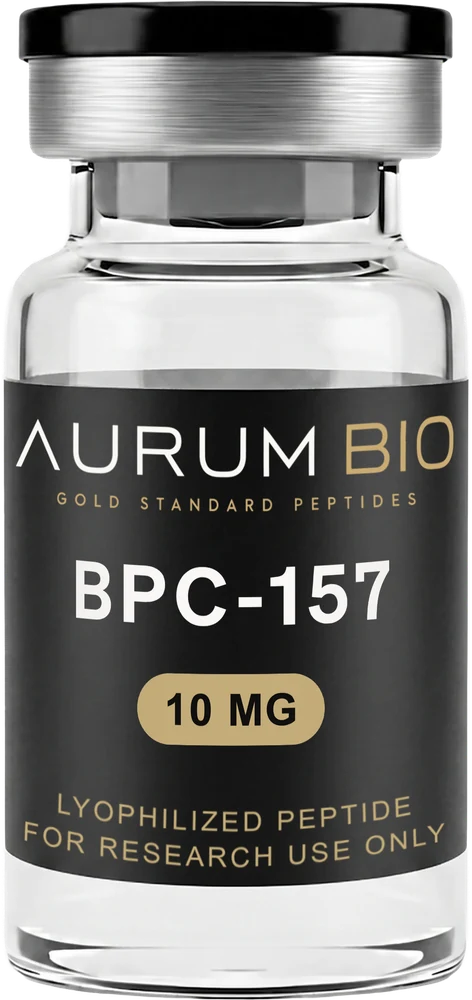
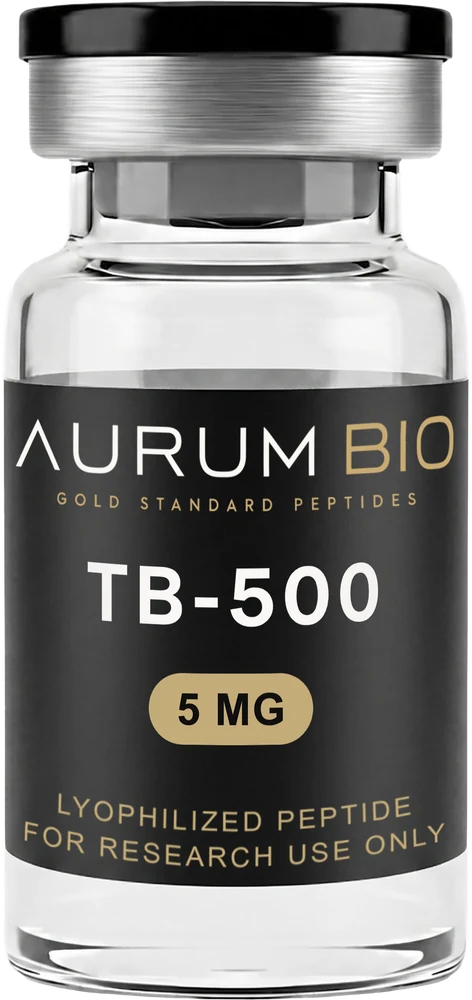
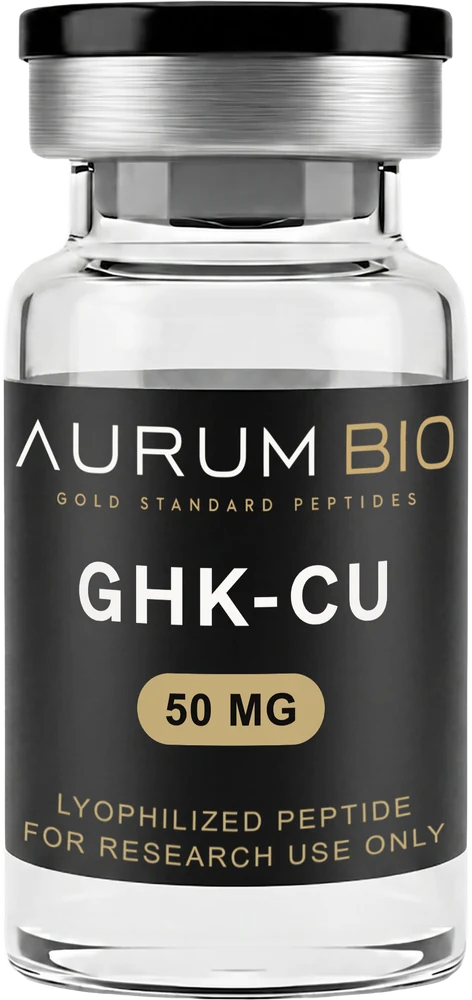
Material listed here is independently assayed for purity and identity: purity by reverse-phase HPLC, identity by mass spectrometry. Those are the two measurements behind every figure on the catalogue.
Three limits belong in the same breath. Published purity figures are HPLC purity and are not net peptide content, which Aurum does not publish. Sterility, endotoxin and pyrogen testing are not performed and not claimed. And where a product page states a purity figure without naming the method beside it, the method is the one described here rather than one stated on the page itself — a gap in the catalogue's own presentation, not in the measurement.
What this report does not establish
It establishes nothing about any compound's activity, and it is not a safety assessment. It describes what a set of analytical methods can determine about a material, which is a narrower question than most specifications are asked to settle.
It also cannot rank suppliers or verify anyone's published figures, including these. A figure is a claim until an independent method reproduces it, and this report is a description of methods rather than an audit of results.
References
- 01Li X, et al. Survey of peptide quantification methods and comparison of their reproducibility: A case study using oxytocin. J Pharm Biomed Anal, 2019.
- 02Thakral S, et al. Intra-Vial Heterogeneity in Physical Form of Mannitol in Colyophilized Binary Systems. Pharm Res, 2018.
- 03Patel SM, et al. Lyophilized Drug Product Cake Appearance: What Is Acceptable?. J Pharm Sci, 2017.
Every citation links out to the paper on PubMed. Identifiers are omitted deliberately rather than reproduced from memory, so where we do not hold a verified PMID or DOI the link is a PubMed search for that exact title — it resolves to the paper without anything being invented.
FOR RESEARCH USE ONLY · NOT INTENDED FOR HUMAN CONSUMPTION. This article describes compounds and the research literature in which they appear. Nothing here is a recommendation, protocol, or statement of effect.