What Does 70 mg Mean on a Blend Vial?
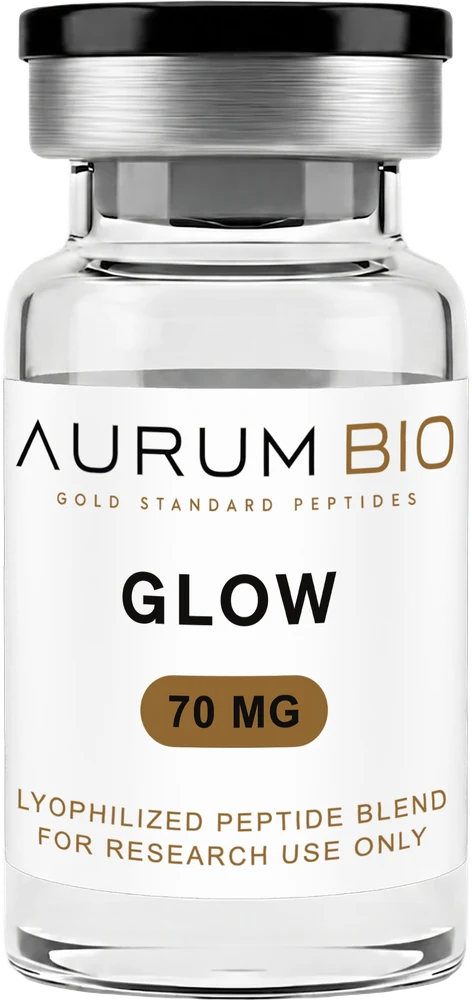
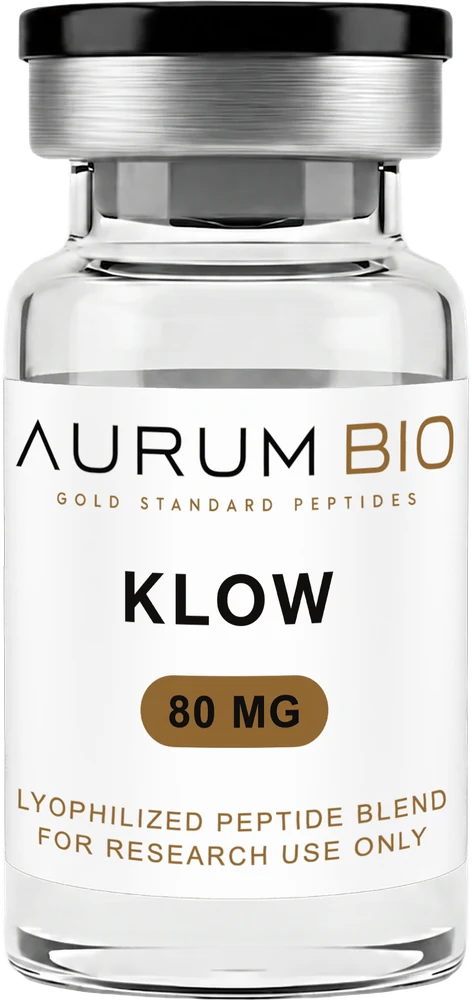
GLOW's label states 70 mg. KLOW's states 80 mg. Both numbers are totals — the sum of the masses listed in each preparation's published composition, not a figure the specification describes as produced by weighing or assaying a finished vial. A single purity figure travels alongside that total, and the two are easy to read as one statement: a percentage that is somehow both how pure the material is and how evenly it is divided among the component peptides. They are not the same statement. Composition states a formulation intent. Purity states a property of the starting material. Neither is a measurement of the vial in hand.
A blend vial states a total, not a per-component mass
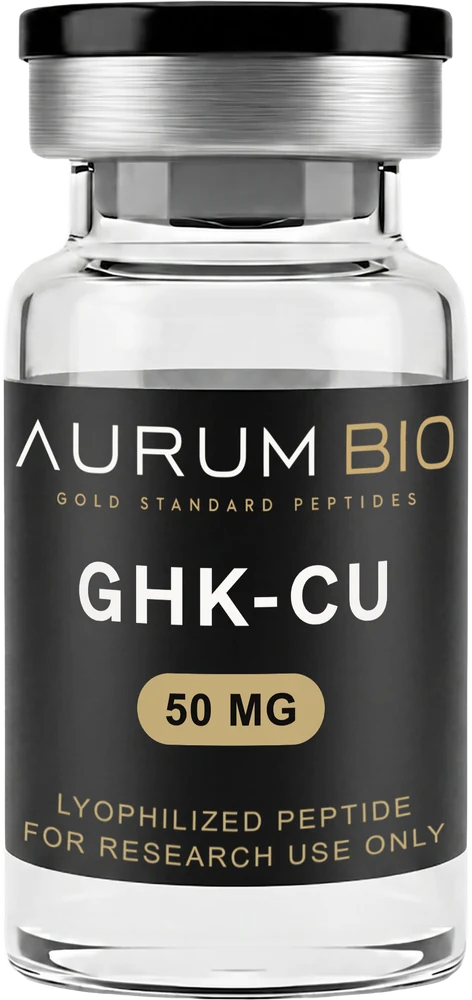
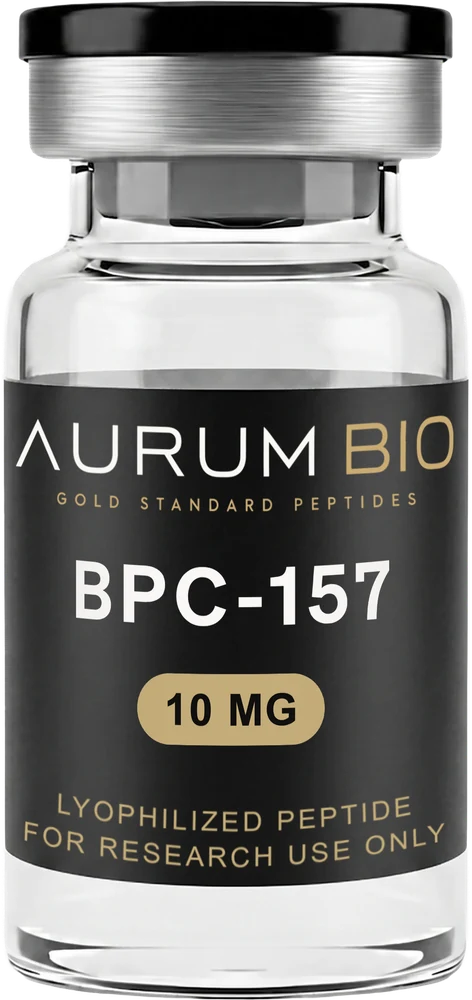
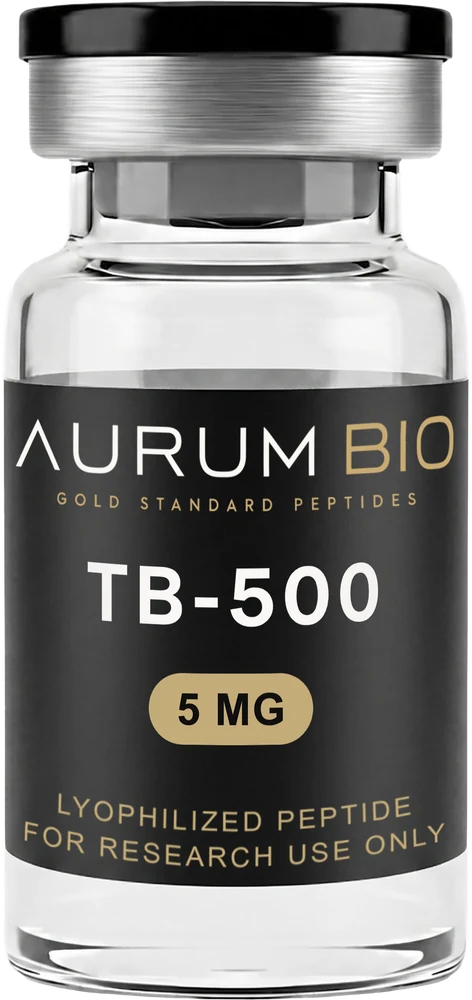
A composition line such as "GHK-Cu 50 mg + BPC-157 10 mg + TB-500 10 mg" is a formulation record: the masses a batch was weighed to contain, added together. The headline figure on the label — 70 mg — is the sum of that line, printed once. The specification does not describe that figure as a net mass read off the finished, lyophilized cake in any single vial by a separate assay.
A single-compound vial's printed mass carries a version of this same limit, covered in more detail in the note on purity versus net peptide content elsewhere in this journal: even with one compound, the figure is a nominal fill target rather than a mass-balance result. A blend vial extends that same nominal-total logic across several compounds at once, which is why the printed number describes what the vial was formulated to be rather than what a downstream measurement found it to contain.
How GLOW and KLOW apportion that total
| Preparation | Component | Stated mass |
|---|---|---|
| GLOW | GHK-Cu | 50 mg |
| GLOW | BPC-157 | 10 mg |
| GLOW | TB-500 | 10 mg |
| GLOW | Total | 70 mg |
| KLOW | GHK-Cu | 50 mg |
| KLOW | BPC-157 | 10 mg |
| KLOW | TB-500 | 10 mg |
| KLOW | KPV | 10 mg |
| KLOW | Total | 80 mg |
KLOW's fourth line, KPV, is a tripeptide fragment of α-melanocyte-stimulating hormone. It is named here because it is part of KLOW's published composition. Unlike the other three compounds in these preparations, KPV carries no independent catalogue listing and therefore no published purity figure of its own — one of KLOW's four stated components has no purity figure behind it at all. Both totals, 70 mg and 80 mg, are the stated masses added together; the specification does not describe either total as a separate figure derived from either preparation as a finished mixture.
Why one purity figure cannot describe four compounds
Purity, as covered elsewhere in this journal, is a peak-area ratio from a reverse-phase HPLC run: the main peak's area divided by the total area of everything the detector registered, for one compound, at one retention time. Four different peptide sequences produce four different sets of peaks at four different retention times. There is no single chromatographic run of a mixed vial that collapses those into one meaningful ratio the way a single-compound purity figure works.
GLOW and KLOW each carry a published purity figure of ≥ 99.2%. As set out in the note on purity versus net peptide content elsewhere in this journal, the purity figures on this catalogue are reverse-phase HPLC figures, though the catalogue page itself states the number without naming the method. That figure, and that figure is a per-component result, carried from the individual compound's own characterization before blending. The specification does not describe it as the output of one assay performed on the combined, finished vial. That distinction — identity and proportion belonging to the starting material rather than the mixture — is the same one drawn in the note on HPLC and mass spectrometry elsewhere in this journal, applied here to a vial with more than one compound in it.
Combining is a different step than characterizing a compound
What the specification supports is a composition line and a per-component purity figure — nothing published describes how the two were produced. A composition line states a target ratio; a purity figure characterizes one already-separated compound's own material, on its own, before it is combined with anything else. Combining several already-characterized compounds into one solution and drying that solution into a single cake is, on its face, a distinct step from characterizing any one of those compounds beforehand — a purity result generated ahead of that step describes the material fed into it, not what the step itself produced.
The total printed on the label is the arithmetic sum of the masses named in the composition line. The specification does not describe that total as a result read off any one finished vial after the fact.
Uniformity is created at blending and measured by assay
Whether the intended ratio of compounds is actually realized — vial to vial, and within a single vial — is a property of how thoroughly the material was mixed and how consistently the mixed material was distributed before drying. It is created at that step. A separate analytical assay, run afterward, is how that property would be measured; the assay is not itself the process that produces uniformity or the absence of it.
A 2018 study of colyophilized binary systems found that even a mixed solution can dry into a cake with heterogeneity in the physical form of one of its components. That is a finding about physical form, not about mass split, and it is not cited here as evidence about the mass distribution inside any GLOW or KLOW vial specifically. What it establishes generally is that combining and drying is a step capable of producing internal differences that a starting-material purity figure, generated before that step, would have no way to register.
The failure mode: reading a composition as a measurement
The failure mode is reading a stated composition as though it were a per-vial measurement. A composition line — GHK-Cu 50 mg + BPC-157 10 mg + TB-500 10 mg — is a formulation intent: the masses a batch was weighed to contain. A purity figure carried from an individual component's lot cannot detect an uneven split within one vial, because purity and content uniformity answer different questions. A perfectly pure component, by the first measure, can still be unevenly distributed by the second — the two results do not constrain or imply each other.
| Composition line | Purity figure | Content uniformity | |
|---|---|---|---|
| Question answered | What was the vial formulated to contain? | How much of an individual component's own material is the target compound? | How evenly is the intended composition distributed across and within filled vials? |
| Determined on | The formulation record — mass weighed per batch | Each component's starting material, before blending | The blending, filling and drying process itself |
| Reported as | Mass per compound, summed to a total | Peak-area ratio, % | Not reported on this specification |
| Tells anything about one finished vial | States what it was made to be | Not stated — published as a per-component figure, not as a figure for the mixture | Would require a direct assay of that specific vial |
What this does not establish
A composition line does not establish that any specific vial's actual mass split matches the stated ratio. Confirming that would require a content assay run on that vial itself. A multi-laboratory study comparing peptide-quantitation methods — HPLC assay, quantitative NMR and amino acid analysis — found meaningful method-dependent variability in a content result even for a single, well-characterized peptide; a content assay is its own analytical undertaking, not an extension of a purity figure carried forward from the starting materials, and the specification does not describe one as having been performed on either preparation.
The per-component purity figure also cannot be used to compare or rank how evenly different blends are mixed. A single ≥99.2% purity figure published for both GLOW and KLOW describes the compounds going into each preparation before combination; it says nothing about whether the four-compound mixture in KLOW is distributed any more or less evenly than the three-compound mixture in GLOW, because neither figure is published as having been measured on the finished mixture.
What Aurum publishes, and what it does not
Aurum's published specification for GLOW and KLOW states a composition and a purity figure. It does not describe a measurement performed on the finished, combined vial. What can be said from published data is what a blend was formulated to contain; what cannot be said is what any individual vial was found to contain after combination. Aurum does not manufacture GLOW or KLOW and does not testify to a supplier's quality-control practice beyond what is published: a single purity figure per blend vial — ≥99.2% for both GLOW and KLOW — which is a per-component figure, carried forward from each compound's own characterization before blending. Composition is what the vial was formulated to be; purity is what the components were before blending. Neither is described as a per-vial content assay.
References
- 01Thakral S, Koranne S, Suryanarayanan R Intra-Vial Heterogeneity in Physical Form of Mannitol in Colyophilized Binary Systems. Pharmaceutical Research, 2018.
- 02Li C, Bhavaraju S, Thibeault MP, et al. Survey of peptide quantification methods and comparison of their reproducibility: A case study using oxytocin. Journal of Pharmaceutical and Biomedical Analysis, 2019.
- 03Iris Biotech Net content and purity, two key parameters in peptide synthesis. Supplier technical note — not peer-reviewed.
Every citation links out to the paper on PubMed. Identifiers are omitted deliberately rather than reproduced from memory, so where we do not hold a verified PMID or DOI the link is a PubMed search for that exact title — it resolves to the paper without anything being invented.
FOR RESEARCH USE ONLY · NOT INTENDED FOR HUMAN CONSUMPTION. This article describes compounds and the research literature in which they appear. Nothing here is a recommendation, protocol, or statement of effect.