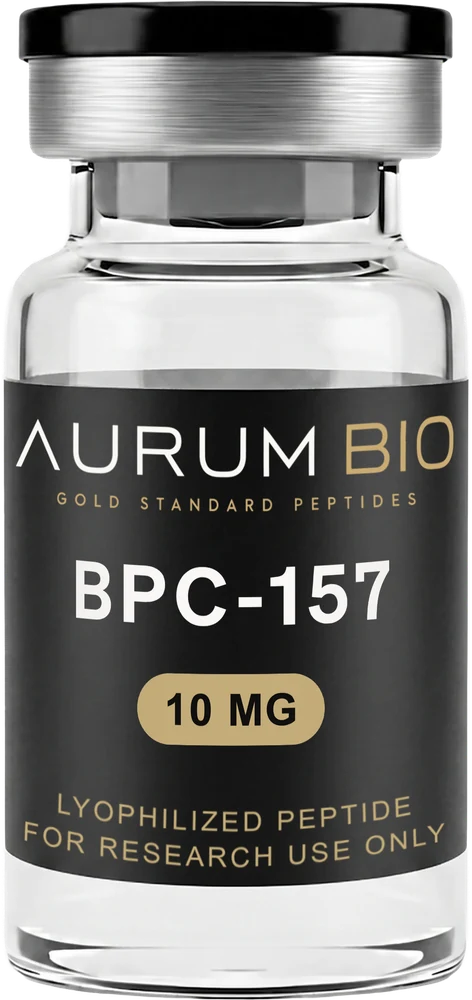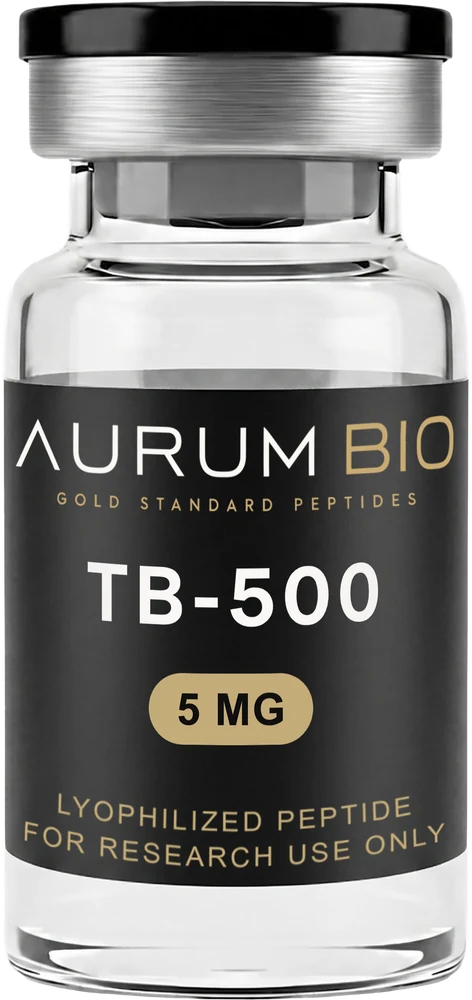

BPC-157 vs. TB-500
BPC-157 and TB-500 are bundled so routinely that most write-ups treat them as two flavours of the same thing. They aren't. One is a synthetic fragment of a gastric protein; the other is a fragment of an actin-binding protein found in nearly every mammalian cell. The distinction changes what the literature on each can actually tell you.
The two compounds sit in the same catalogue category and get discussed in the same forum threads, which creates a false impression of equivalence. Read the primary literature and they diverge almost immediately — in what the molecule is derived from, in the mechanisms researchers have proposed, and in how independent the underlying body of work is.
At a glance
| BPC-157 | TB-500 | |
|---|---|---|
| What it is | Synthetic pentadecapeptide (15 amino acids) | Synthetic fragment of Thymosin Beta-4 (Tβ4), a 43-amino-acid protein |
| Origin of the sequence | Partial sequence of a protein identified in human gastric juice | The actin-binding region of a protein expressed in most mammalian cells |
| Proposed mechanism class | Multi-pathway; no single receptor identified | Actin sequestration and cell-migration effects |
| Primary research domains | Gastrointestinal, tendon and ligament, vascular models | Wound-closure, cardiac, corneal and cell-migration models |
| Evidence tier | Preclinical only | Preclinical (fragment); early human work exists on the parent protein |
| Authorship breadth | Concentrated in one principal research group | Broadly distributed across independent groups |
| Form supplied | Lyophilized powder | Lyophilized powder |
BPC-157: what the molecule is
BPC-157 — Body Protection Compound-157 — is a chain of fifteen amino acids corresponding to a partial sequence of a larger protein first isolated from human gastric juice. It is not a naturally occurring peptide in its own right; it is a synthetic construct built from a region of that protein. A frequently noted property in the literature is its stability in aqueous solution and in gastric acid, which is unusual for a peptide of that length and is part of why it attracted research interest.
No receptor for BPC-157 has been identified. That single fact shapes everything else about its literature. Rather than a receptor-binding story, researchers have proposed a set of downstream interactions observed in animal and cell models:
- Nitric oxide pathway interaction — the most frequently invoked mechanism, tied to vascular tone and blood flow in injury models.
- Growth hormone receptor expression — Chang and colleagues reported increased GH receptor expression in cultured tendon fibroblasts, a proposed route by which a local signal could be amplified without introducing an external hormone.
- Cell migration and outgrowth — in tendon explant work, effects on fibroblast outgrowth, survival and migration were reported, with FAK-paxillin signalling implicated.
- VEGFR2 and angiogenic signalling — proposed in later vascular-model work.
The honest characterisation is that these are candidate mechanisms studied in animals and cells, not an established pathway. Reviews written by the group most associated with the compound present them as a coherent picture; that picture has not been independently reconstructed at scale.
TB-500: what the molecule is, and what it isn't
This is where most comparisons go wrong. TB-500 is not Thymosin Beta-4. Tβ4 is a 43-amino-acid protein present in most mammalian cells and one of the major intracellular actin-sequestering proteins — it binds monomeric G-actin and regulates the pool available for filament assembly. TB-500 is a synthetic construct built around the actin-binding region of that protein, centred on the LKKTETQ motif.
The distinction matters because the two have separate literatures. Tβ4 itself has been studied for decades across independent groups: Malinda and colleagues reported accelerated wound closure in dermal models; Bock-Marquette and colleagues published cardiac cell-migration and survival work in Nature; Goldstein, Hannappel and Kleinman's review is the standard framing of the protein as an actin regulator with tissue-repair activity. The full-length protein also progressed into early human clinical work in ophthalmic and dermal settings.
TB-500 — the shorter research fragment — inherits the plausibility of that work but not its evidence. When a supplier or article cites Tβ4 human data next to a TB-500 listing, those are not the same molecule and the citation does not transfer.
Mechanistically, they are not redundant
Where the two are genuinely different is in the level at which they are proposed to act. Tβ4 and its fragment are characterised around a defined biochemical function — binding G-actin, influencing the cytoskeletal machinery that cells use to migrate. That is a specific, well-described molecular role, and the cell-migration findings follow from it directly.
BPC-157 has no such anchor. Its literature describes system-level outcomes in injury models across several tissue types, with candidate signalling pathways proposed after the fact. This is not a criticism of the observations; it is a description of what kind of evidence they are. One compound has a mechanism looking for confirmed outcomes, the other has outcomes looking for a confirmed mechanism.
Evidence, graded honestly
| Question | BPC-157 | TB-500 |
|---|---|---|
| Identified receptor | None reported | Not receptor-mediated; binds G-actin |
| Independent replication | Limited — authorship is concentrated | Parent protein widely replicated; fragment less so |
| Published human randomised trials | None located | None on the fragment; early-phase work exists on Tβ4 |
| Long-term safety data | Not established | Not established |
| Species in most studies | Rat, some mouse | Mouse, rat, rabbit; some primate corneal work |
What the comparison cannot tell you
There is no published head-to-head study of these two compounds. Every side-by-side you will read — including this one — is assembled from separate literatures run in different models, in different species, by different groups, measuring different endpoints. That is a structural limit, not a gap someone forgot to fill.
It follows that no comparative statement about relative potency, relative speed or relative suitability for any application is supportable from the current literature. Nor does the frequent pairing of the two in commercial blends — such as the Wolverine Stack composition — constitute evidence of combined activity. Co-formulation is a supply decision; the research question of whether two compounds interact meaningfully has not been addressed in controlled work.
Handling and identity
Both are supplied as lyophilized powder and both are handled the same way in a research setting: reconstituted with bacteriostatic water, lyophilized material stored at −20 °C, reconstituted solution held at 2–8 °C and protected from light.
Identity verification is where they differ in practice. BPC-157 has a well-established CAS registry entry and a distinctive fifteen-residue sequence, so mass-spec confirmation against a certificate of analysis is straightforward. TB-500 is sold under several fragment definitions across the market, which means the sequence stated on the certificate is the thing to read — not the trade name. Two vials both labelled TB-500 are not guaranteed to contain the same construct.
The short version
- They are not two versions of one compound. Different origins, different proposed mechanisms, different literatures.
- BPC-157's evidence is entirely preclinical and unusually concentrated in one research group.
- TB-500 is a fragment of Tβ4, and the strongest published work belongs to the full protein rather than the fragment.
- No head-to-head study exists, so relative claims of any kind are unsupported.
- For TB-500 especially, read the sequence on the certificate of analysis rather than the product name.
References
- 01Sikirić P, et al. Stable gastric pentadecapeptide BPC 157: novel therapy in gastrointestinal tract. Current Pharmaceutical Design, 2011.
- 02Chang CH, et al. The promoting effect of pentadecapeptide BPC 157 on tendon healing involves tendon outgrowth, cell survival, and cell migration. Journal of Applied Physiology, 2011.
- 03Chang CH, et al. Pentadecapeptide BPC 157 enhances the growth hormone receptor expression in tendon fibroblasts. Molecules, 2014.
- 04Krivic A, et al. Achilles detachment in rat and stable gastric pentadecapeptide BPC 157: promoted tendon-to-bone healing and opposed corticosteroid aggravation. Journal of Orthopaedic Research, 2006.
- 05Goldstein AL, Hannappel E, Kleinman HK Thymosin β4: actin-sequestering protein moonlights to repair injured tissues. Trends in Molecular Medicine, 2005.
- 06Malinda KM, et al. Thymosin beta4 accelerates wound healing. Journal of Investigative Dermatology, 1999.
- 07Bock-Marquette I, et al. Thymosin beta4 activates integrin-linked kinase and promotes cardiac cell migration, survival and cardiac repair. Nature, 2004.
- 08Philp D, Kleinman HK Animal studies with thymosin beta, a multifunctional tissue repair and regeneration peptide. Annals of the New York Academy of Sciences, 2010.
Every citation links out to the paper on PubMed. Identifiers are omitted deliberately rather than reproduced from memory, so where we do not hold a verified PMID or DOI the link is a PubMed search for that exact title — it resolves to the paper without anything being invented.
FOR RESEARCH USE ONLY · NOT INTENDED FOR HUMAN CONSUMPTION. This article describes compounds and the research literature in which they appear. Nothing here is a recommendation, protocol, or statement of effect.