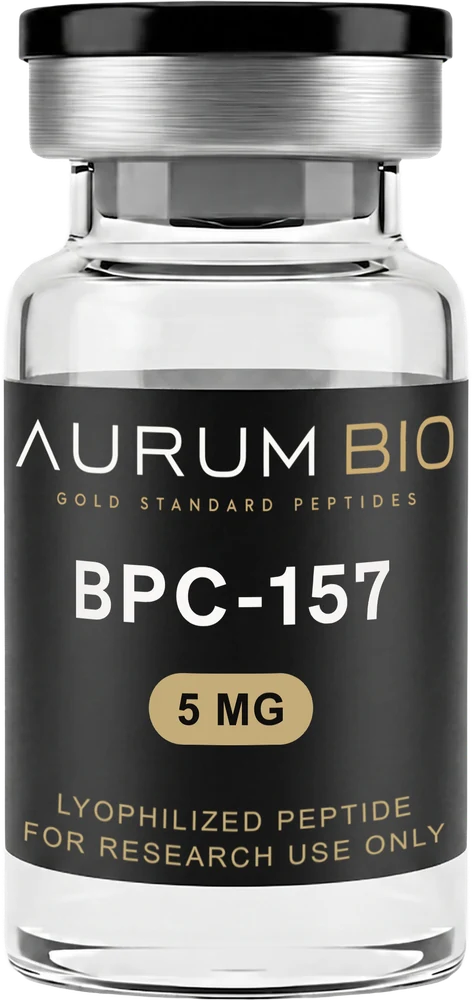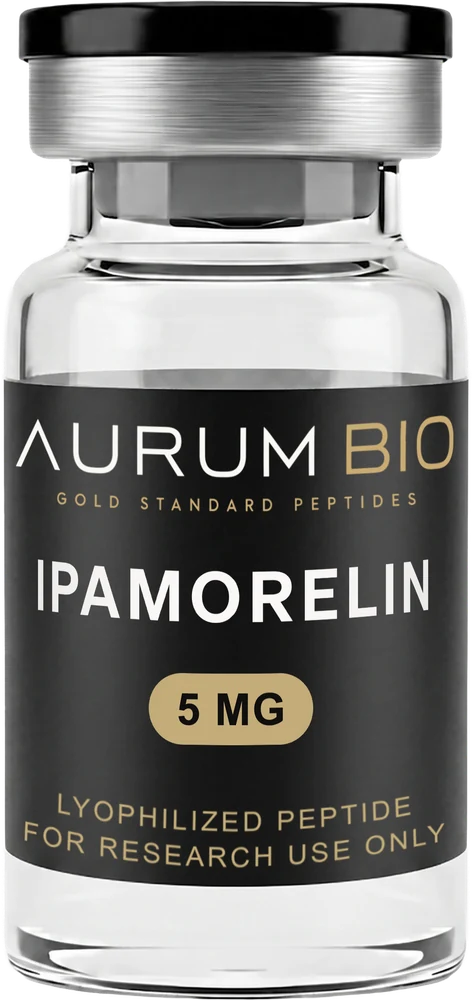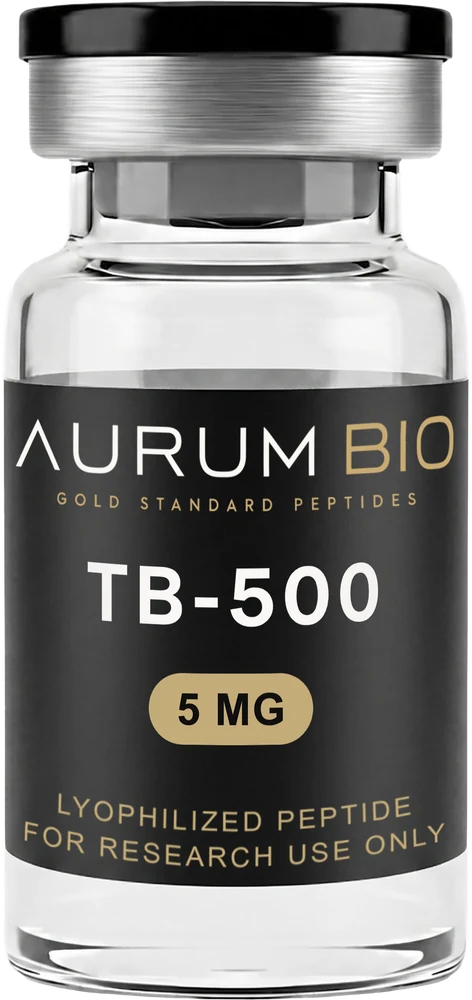

The \"Wolverine Stack\": BPC-157, TB-500 & CJC-1295
Few names in the peptide research world generate more curiosity — or confusion — than the \"Wolverine Stack.\" Here is what it actually is, the proposed rationale, and the line between what we know and what we don't.
What is the Wolverine Stack?
A loose term for a combination of three peptides:
- BPC-157 (Body Protection Compound-157)
- TB-500 (Thymosin Beta-4)
- CJC-1295 (with or without DAC)
Some variations add Ipamorelin as a fourth component — CJC-1295 + Ipamorelin alongside BPC-157 and TB-500 — combining the growth hormone axis with the tissue repair axis.
The "Wolverine" nickname comes from online bodybuilding and longevity communities, an allusion to the X-Men character's healing ability. It's a marketing name, not a scientific one.
Why these three peptides?
The proposed rationale is complementarity.
- BPC-157 — tissue repair specialist; most evidence for tendon, ligament, and GI tissue. Proposed GH receptor upregulation, nitric oxide pathway effects, and F-actin stabilization.
- TB-500 — anti-inflammatory and tissue remodeling; proposed actin regulation, MMP modulation, and angiogenesis.
- CJC-1295 — growth hormone amplifier; stimulates pituitary GH release.
The hypothesis: BPC-157 repairs tissue, TB-500 controls inflammation and creates a better healing environment, and CJC-1295 raises GH to fuel the process. A reasonable mechanistic hypothesis — not validated by any clinical research.
Breaking down each component
BPC-157
Proposed role: direct tissue repair. Strongest evidence: animal studies on tendon, ligament, and GI wound healing. Key gap: no human clinical trials. Dosing in research contexts: widely variable, with no established human standard.
TB-500
Proposed role: anti-inflammatory action, angiogenesis, and tissue environment. Strongest evidence: corneal wound healing — one of the few areas with human data. Key gap: less direct tissue-repair evidence than BPC-157.
CJC-1295
Proposed role: elevate GH to support repair. Strongest evidence: human studies showing GH and IGF-1 elevation. Key gap: no evidence that elevated GH from CJC-1295 translates to meaningful recovery outcomes in healthy humans.
What does the research actually show?
There is no published peer-reviewed study examining the Wolverine Stack as a combination in humans. None.
There are animal studies on BPC-157 and TB-500 individually, human studies on CJC-1295 individually (GH elevation, not recovery), and animal studies on GH peptides for tissue repair. No study puts all three together and measures recovery outcomes in any species.
What advocates cite as "evidence" is the combination of separate research threads plus a plausible mechanistic story. Plausibility is not proof.
How the stack is used in practice
Typical community protocols:
- BPC-157 — often 250–500 mcg, 1–2x daily, subcutaneous (some use oral).
- TB-500 — often 2–2.5 mg, 2–3x weekly, subcutaneous (loading and maintenance phases discussed).
- CJC-1295 — dosing varies by DAC vs non-DAC (non-DAC typically daily, DAC less frequent).
- Ipamorelin (when included) — typically 100–300 mcg, 1–3x daily.
Important: these are community-sourced protocols, not clinically validated regimens. They come from forums, anecdotal reports, and individual interpretation of the literature.
Oral vs. injectable BPC-157
One of the most debated questions.
For oral: BPC-157 was first identified in GI tissue, is stable in gastric acid, and some animal studies show effects from oral administration (GI protection).
Against: for tendon and ligament repair, systemic delivery (subcutaneous) is the route used in animal studies, and oral peptide bioavailability is generally low.
What the research shows: tendon and ligament studies used injectable routes; oral studies focused on GI protection — different applications.
Honest answer: we don't know whether oral BPC-157 is effective for systemic tissue repair in humans.
Common questions about the stack
Does it work? We don't know — no human clinical trial data.
Is it safe? Long-term safety of these peptides in humans is not established; "didn't die in 30 days" isn't "safe." GH elevation from CJC-1295 is a concern, as chronically elevated GH and IGF-1 are associated with increased cancer risk in some studies.
Can I take this instead of seeing a doctor for an injury? No — peptides are research chemicals; see a medical professional.
How do I evaluate claims? Ask: peer-reviewed or forum/marketing? Human, animal, or cell? Does the claim apply to the specific peptide or the combination? Are funding and conflicts disclosed? Is the dosing the same as the study's?
The bottom line on the Wolverine Stack
A compelling hypothesis built on three genuinely interesting peptides with varying research support: BPC-157 has the most consistent animal data for tissue repair, CJC-1295 the most established human pharmacology, and TB-500 the most plausible anti-inflammatory mechanism.
The combination is rational the way "take a repair peptide, an anti-inflammatory peptide, and a GH amplifier together" is rational — superficially reasonable, not clinically validated. For researchers, it's an underexplored area that deserves proper study. For anyone else: it might work, but we don't have the evidence to say, the risk profile isn't established, and the dosing is community-sourced.
Wolverine is fiction. The research is real, and it says: we don't know yet.
References
Citations are listed by title so they can be verified directly on PubMed. Identifiers are omitted deliberately rather than reproduced from memory.
FOR RESEARCH USE ONLY · NOT INTENDED FOR HUMAN CONSUMPTION. This article describes compounds and the research literature in which they appear. Nothing here is a recommendation, protocol, or statement of effect.